

The last time I wrote about this story was sometime in 2022.
I ended with three words: “To be continued.”
At the time, I genuinely meant it. Then life got busy.
Work happened. Marriage happened. Projects and deadlines appeared. New responsibilities replaced old routines. The draft sat there, unfinished, quietly waiting for a version of me that had enough margin to return and complete it.
Three years later, this feels like the right time.
A lot has changed since Part 1. Some of those changes are obvious. Back then, Adetoro was someone I had just met on Instagram. Today, she is my wife.
Other changes are quieter. My writing has evolved. The way I think about relationships has shifted. Even the way I remember certain events has changed. Time has a way of sanding down the dramatic edges and leaving behind the details that truly mattered.
So, let me continue the story.
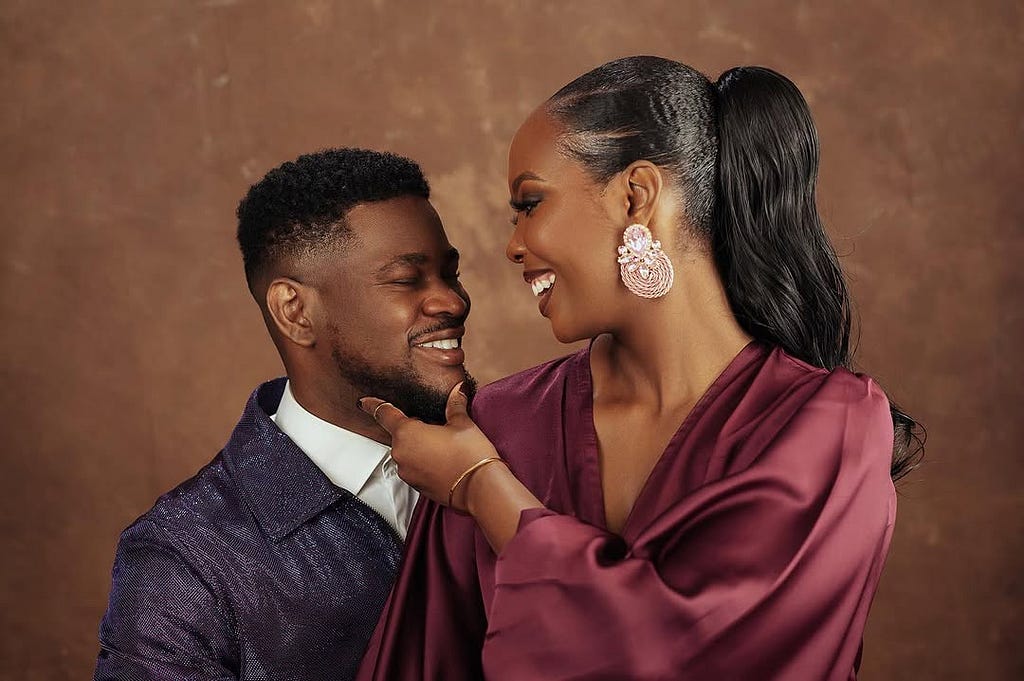
When I got Adetoro’s number on Christmas Day in 2020, I didn’t have a grand plan.
I knew I liked her. I knew she seemed different from most of the people I had spoken to before. I also knew she lived in Kaduna.
That last part mattered.
It is easy to underestimate distance when you’re sitting behind a screen. You exchange messages, make phone calls, and send voice notes. Everything feels close because your phone is always within reach.
Then reality taps you on the shoulder.
This person is hundreds of kilometres away. You have never seen her in real life. You don’t know how she behaves when she’s tired, how she treats strangers, or whether conversations that feel effortless online will still feel that way when you are sitting across from each other at a table.
For weeks, we talked constantly. Morning conversations flowed into the afternoon and often stretched into the late night. There was no official structure; we were simply learning about each other. The more we spoke, the clearer it became that we had a lot in common.
But I also had enough life experience to know that having things in common is not the same as building a life together. Somewhere during those early weeks, I got nervous-not because of her, but due to the situation.
I remember telling her that perhaps we should slow things down, maybe remain friends, maybe avoid creating expectations too early. I thought I was being practical.
She wasn’t impressed.
Her response was straightforward: we either move forward or we don’t. Friendship wasn’t what she wanted.
Looking back, that conversation forced me to confront what was really happening. The problem wasn’t distance; the problem was fear. Distance was simply the excuse I was giving it.
After speaking with a few friends and thinking it through properly, I realised something obvious. If I genuinely believed she was worth getting to know, then distance was a logistical problem-and logistical problems have solutions. There are flights, roads, and calendars. The real question was whether I was willing to make the effort.
The answer was yes.
So I called her back, apologised, and we continued.
A few weeks later, sometime in February 2021, I asked Adetoro to be my girlfriend.
What’s interesting is that I asked before seeing her in person. Some people would consider that reckless, and maybe they’re right. But by that point, I wasn’t making the decision based on photographs, Instagram, or excitement. I had spent enough time talking to her to understand the kind of person she was, at least well enough to know I wanted to find out more.
She said yes.
Now there was only one problem: we still hadn’t met.
Around that time, I told her I would be travelling to Abuja. Technically, it wasn’t a lie. I did have a friend there. But that wasn’t the main reason. The main reason was in Kaduna.
Eventually, I stopped pretending otherwise and told her the truth: I was coming because I wanted to see her.
She agreed to come to Abuja with her sister.
I don’t remember every detail from that trip. Memory is strange like that; some moments remain vivid while entire afternoons disappear. What I remember most is waiting while she tried to find my Airbnb. She couldn’t quite figure out the correct location. Eventually, she did, and then I saw her for the first time, stepping out of the cab she had ordered.
It’s difficult to explain exactly what I felt. There was relief; I wasn’t worried about how she looked; I was grateful that everything aligned. The person I had spent weeks talking to was the same person standing in front of me: the same personality, warmth, intelligence, sense of humour. Nothing felt out of place.
That mattered a lot.
Many relationships struggle because people fall in love with projected versions of people, ideas, and characters they’ve created in their own heads. Meeting Adetoro closed the gap between imagination and reality, and the reality was good. Very good.
The visits continued. I travelled again. She came again. Over time, the relationship stopped feeling theoretical and became part of normal life.
Then something happened that made everything easier: she got a job in Lagos.
I still remember how significant that felt. Suddenly, we weren’t planning around flights to Abuja or calculating weeks between visits. We were in the same city.
Not the same neighbourhood, though. She was on the Island. I was on the Mainland. Anyone who lives in Lagos knows those can feel like different countries sometimes. Still, it was far better than Kaduna.
Weekends became easier. Our conversations deepened. Ordinary moments became possible, and those ordinary moments taught me more about her than any phone call ever could.
By 2022, marriage had entered the conversation, not under pressure or because of some arbitrary deadline, but because it was the logical direction of travel.
Long before I met Adetoro, I had spent time thinking about the kind of person I wanted to build a life with. In many ways, that preparation made it easier to move forward with clarity once she appeared.
People often ask how I knew she was the right person. The honest answer is probably less romantic than they expect. There was no single defining moment, dramatic sign, or cinematic revelation. I wasn’t walking around hearing wedding bells.
I paid attention. That was mostly it.
I paid attention to the things that would still matter ten years later: faith, character, career, temperament, how she approached problems, how she treated people, whether our goals were compatible, and if we could build the kind of life we both wanted.
In my head, I had a few categories: things that were non-negotiable, things that were desirable, and things that didn’t matter very much. Physical attraction was already assumed; there’s no point pretending otherwise. You should be attracted to the person you’re dating. That part was obvious, and the harder questions came after that.
Could we work together? Could we solve problems together? Could we make decisions together? Could we build something together?
Those were the questions I cared about, and the answers kept coming back positive.
There was still one thing left: meet her parents properly.
That turned out to be harder than expected, mainly due to security concerns. At the time, travelling between Abuja and Kaduna wasn’t something people took lightly. A train attack had happened earlier, and road travel carried risks. So we waited.
When things improved enough, we finally travelled to Kaduna. We spent a few days there, met her parents, spent time with the family, and spoke openly about my intentions. The visit was straightforward, no dramatic negotiations or movie scenes. It was just conversations, questions, answers, and people trying to understand one another.
I left Kaduna with more confidence than I had when I arrived.
On December 24th, 2022, Adetoro’s birthday, I proposed.
The proposal was intentionally small, exactly how she wanted it. There was no audience, performance, or elaborate production. It was just us.
She said yes. Again. Thankfully.
Everything moved quickly after that.
Parents met parents. Plans turned into dates. Dates became bookings. Bookings turned into invoices — many invoices. Anyone who has planned a Nigerian wedding understands that sentence.
My parents travelled to Kaduna to meet her parents. Both families spent time together. Conversations were had. Agreements were reached. One thing I remain deeply grateful for is how reasonable everyone was throughout the process. That helped more than I can explain.
Eventually, we settled on Lagos.
Our court wedding took place on September 5th, 2023. A couple of weeks later, on September 21st, we had the church wedding and the traditional ceremonies with family, friends, photographs, music, and all the usual elements of a Nigerian wedding.
And then it was over.
Or rather, it began.
Today, as I write this in November 2025, we’ve been married for a little over two years, long enough to know that marriage isn’t the finish line people sometimes imagine it to be. It is simply a different phase of the story.
Some parts have been easier than I expected. Some parts have been harder. There are things nobody explains properly beforehand, and there are things you can only learn by living them.
We’ll save those stories for another day.
For now, I’m mostly grateful that I pressed “Follow” on Instagram on Christmas Eve in 2020; a small, ordinary decision, the kind you usually forget five minutes later, except this one kept going.
Three years ago, I wrote, “To be continued.”
Now, it finally is.
The funny thing is that I’ve barely scratched the surface. There are stories I’ve skipped entirely: the long-distance years, the wedding planning, the career decisions we had to make together, the projects that shaped our lives, the mistakes, the lessons, the things that felt important at the time but weren’t, and the small moments that turned out to matter.
Maybe those should come next.